
Read the full article at the Education News Canada. Excerpt below:
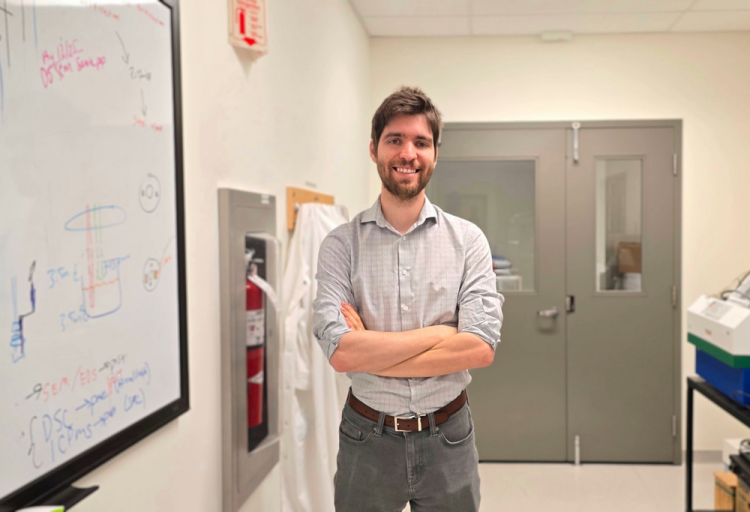
As Saskatchewan charts its course toward zero-emission energy, the University is becoming a critical hub for the talent and research that will power the next generation. This summer, that strategy came to life inside the lab of Dr. Arthur Situm, an assistant professor of engineering and Canada Research Chair in Small Modular Reactor Safety and Licensing. He hosted Pierre Ryckewaert, a visiting nuclear engineering graduate student from France, to help tackle a key challenge: how to build a local talent pipeline while simultaneously attracting engineers from places with decades of nuclear expertise. Ryckewaert’s work on cutting-edge corrosion research is already helping to lay the groundwork for Canada’s leadership in the field.
“Jurisdictions like France have extensive experience in nuclear power, and it’s a good idea to partner with nations like France to build connections and attract talented individuals to advance our nuclear energy industry here.” Dr. Situm explains, “They get the vast majority of their power from nuclear energy, and they have top-notch nuclear engineering schools. By inviting students like Ryckewaert, the University not only provides invaluable experience but also showcases Saskatchewan as a place where top talent can build a career, effectively creating a global pipeline for the province’s future workforce.”
The U of R’s nuclear strategy is a masterful blend of pragmatism and foresight. A key component of this strategy will be the development of new state-of-the-art infrastructure, such as the SMR Safety, Licensing & Testing (SMR-SLT) Centre. This planned facility will serve as the cornerstone for the University’s nuclear research ambitions, enabling world-class studies and host top international talent.
Dr. Situm says that much of his team’s immediate focus will be on supporting the natural circulation boiling water reactors that Saskatchewan is planning to build, addressing today’s energy needs.
However, true leadership requires looking beyond the horizon. This is where Ryckewaert’s research comes in. His project focused on molten salt, a key component of “Generation IV”, the next generation in nuclear technology. These advanced reactors operate at higher temperatures, can better integrate with intermittent renewables, and can even be powered by nuclear waste, promising a more sustainable energy cycle. By investing in both current and future technologies, the University ensures Saskatchewan won’t just be an adopter of nuclear energy, but a long-term innovator on the global stage.